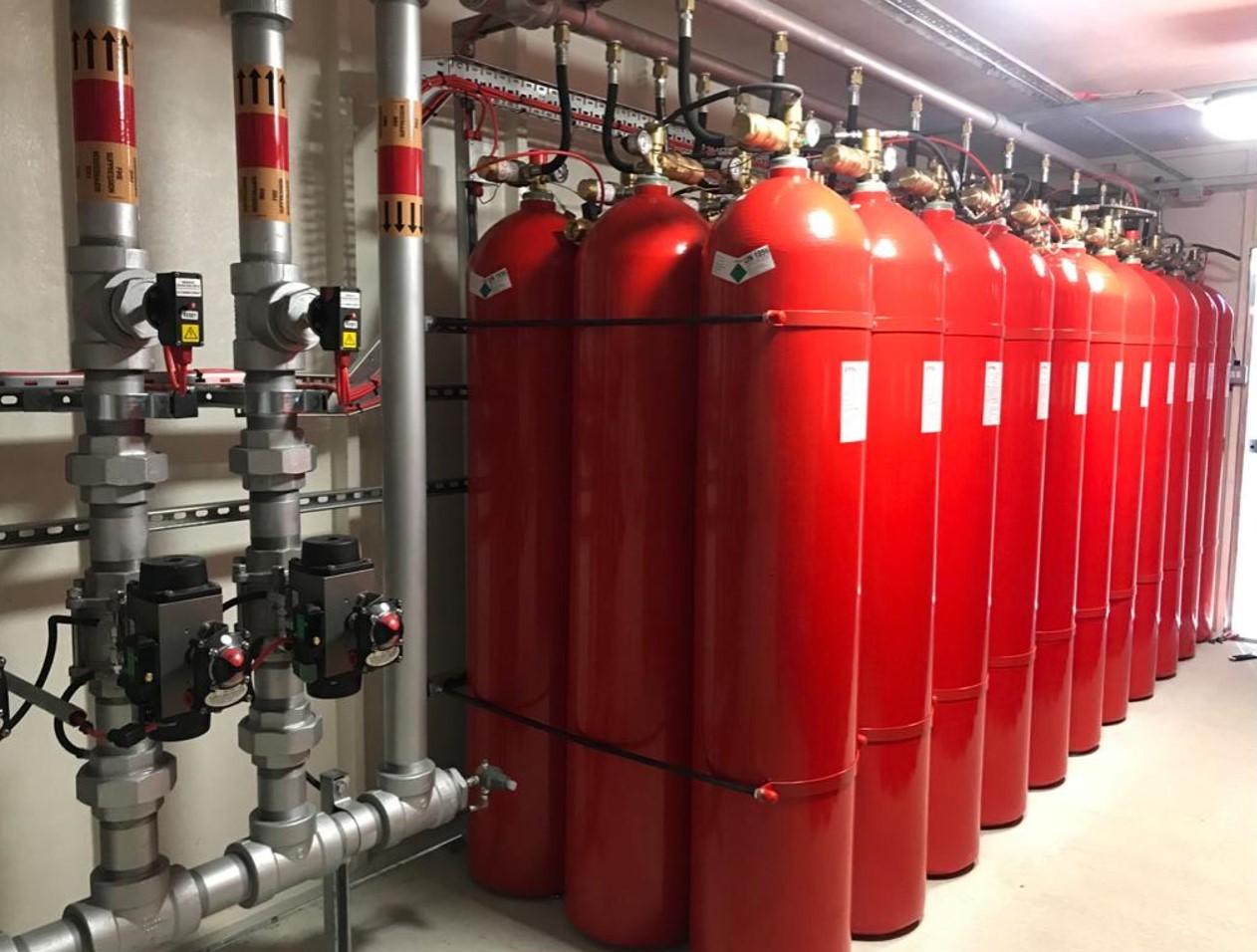
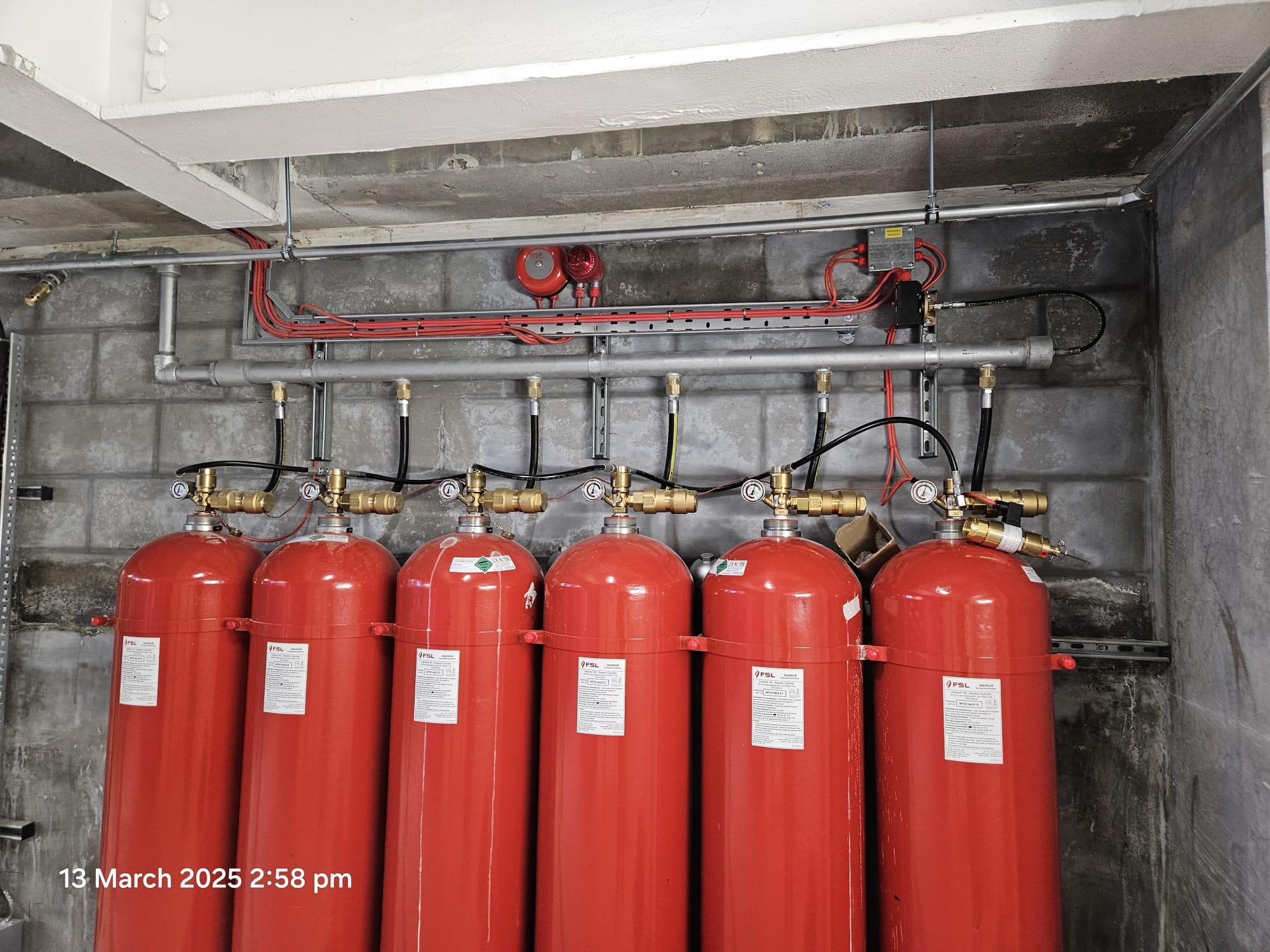
What sets a gaseous system off?
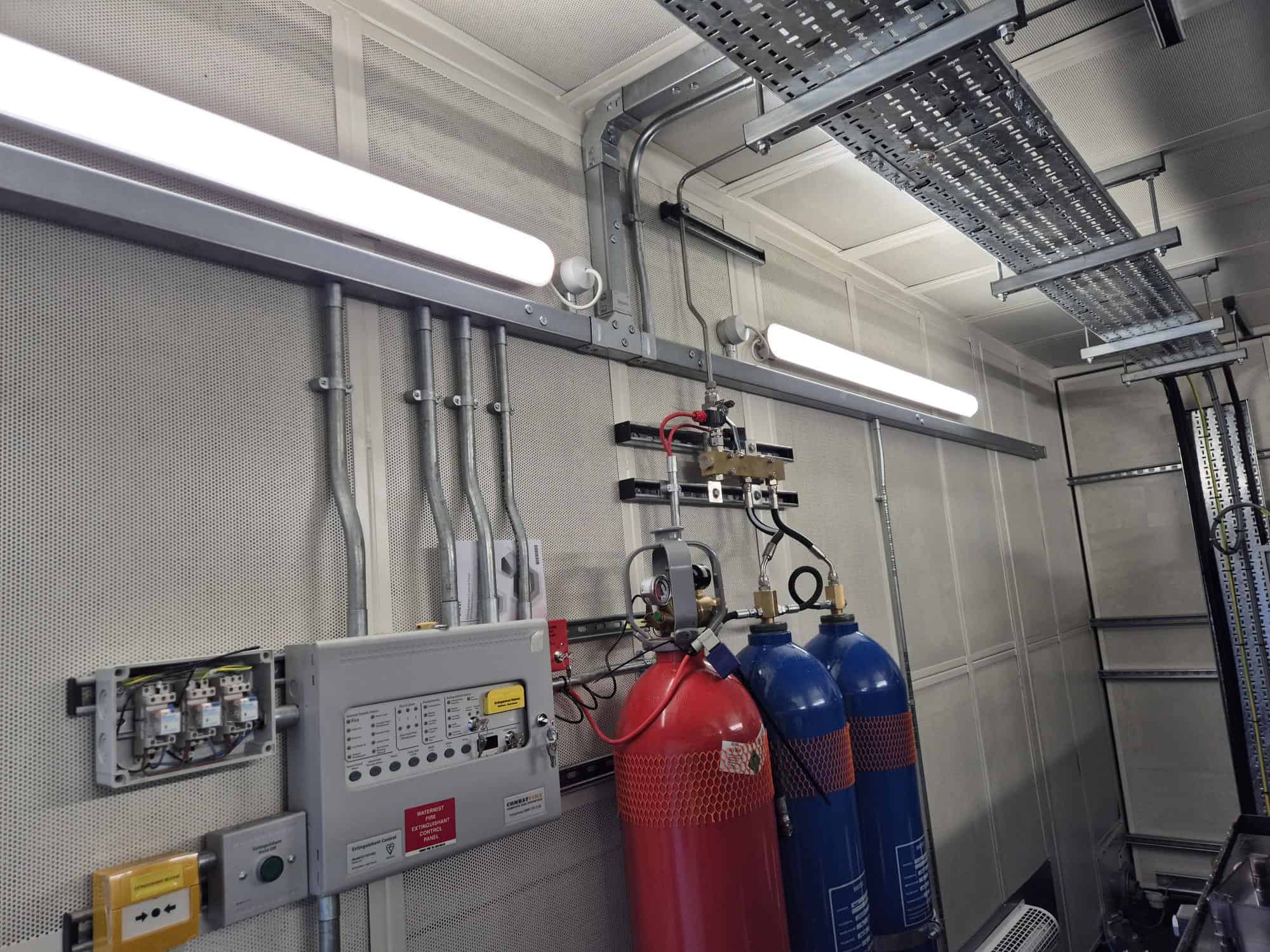
Detection initiates the discharge. The suppression system does not sense fire on its own, so it works as part of a detection and alarm installation, with the panel controlling the sequence between detection and release. Combat Fire designs detection and alarm systems that interface with suppression, evacuation and building management systems, so both sides can be designed together rather than one being retrofitted to the other.
Can a gaseous system be connected to the alarm and building management systems already on site?
Yes. Combat fire detection design using intelligent control panels and remote monitoring, with interfacing to suppression, evacuation and building management systems.
How is the amount of agents worked out?
By the volume of the space being protected. A flooding factor appropriate to the hazard is applied to that volume to determine the quantity required. For some applications, the calculation is based on area rather than volume, depending on whether the risk is the whole enclosure or a specific piece of plant within it.
Does the room need to be sealed?
The enclosure has to hold the agent at concentration long enough to put the fire out and keep it out, so leakage through cable penetrations, ventilation openings and gaps in the structure affects whether the system performs as designed. Sealing requirements are identified during the site survey.
Can these systems be used in occupied rooms?
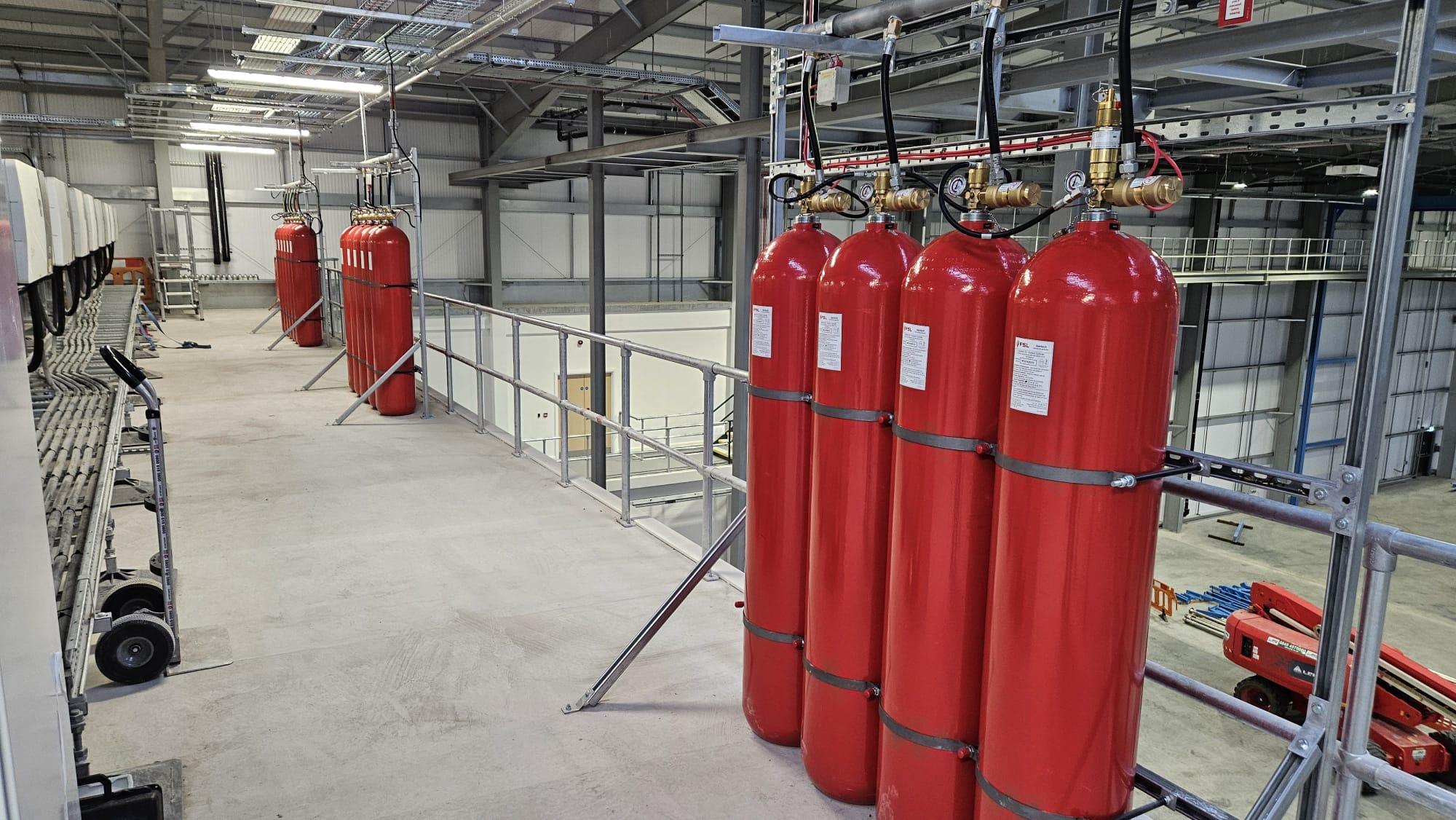
FK-5-1-12 extinguishes by heat absorption rather than by depleting oxygen, which is why Combat Fire describes it as safe for use in occupied spaces. Inert gas works by reducing oxygen concentration, so how the space is occupied is a design consideration to raise at the survey stage.
How does gaseous suppression compare with water mist?
Both suppress without the water volume of a traditional sprinkler system, and Combat Fire install both. Gaseous leaves no moisture or residue at all, which is why it’s the choice for electronics. High-pressure water mist atomises water into ultra-fine droplets to cool and displace oxygen with minimal water volume and is suited to machinery spaces, generator rooms and process areas where some water is acceptable but collateral damage has to be controlled.
Our insurer has told us we need suppression. What happens next?
Combat Fire carries out a free site survey and issues a written quotation before any commercial commitment, so the technical assessment happens before you are committed to anything. Where suppression is a condition of cover, the requirement often falls to company directors rather than sitting with the facilities team alone, so it’s worth establishing early who needs to sign off.