
Protecting various facilities from fire damage means recognising that different industries pose their own dangers. Take industrial fat fryers; you’ll find these in certain food production facilities, but probably not in a medical research laboratory. Similarly, if you’re dealing with hazards like the flammable chemicals found in some labs, a fire suppression system for a food production plant might not suit your needs.
When you’re in charge of protecting people and equipment from fire damage, the specifics matter. Even two laboratories might differ greatly when it comes to their fire suppression needs; a chemical laboratory and a biological laboratory have different hazards. If you’re unsure about how to best protect your facility and staff from fire, here is what you need to know about how various suppression systems are suited to different hazards and industries.
Food Industry Fire Suppression Systems
Large-scale food production facilities are full of unique fire hazards that you need to consider when looking at fire suppression systems. High-temperature ovens and fryers are in constant operation, while flammable oils and organic powders may also be present.
Fires from overheating, electrical faults or accidental ignition can start and spread quickly. You need a robust suppression system in place to protect your facility from damage and costly downtime.
Fire Safety in the Laboratory
Laboratory fire risks are also highly varied due to the wide range of chemicals and equipment used daily. Flammable liquids and open flames are one of the biggest risks; however, you also need to consider electrical issues in any of your lab machinery, as well as reactive chemicals. In addition to expensive equipment, laboratories house a large amount of unique data and samples. So you need a suppression system that can control a fire without costing you valuable research.
Why Traditional Sprinklers May Not Always be Suitable
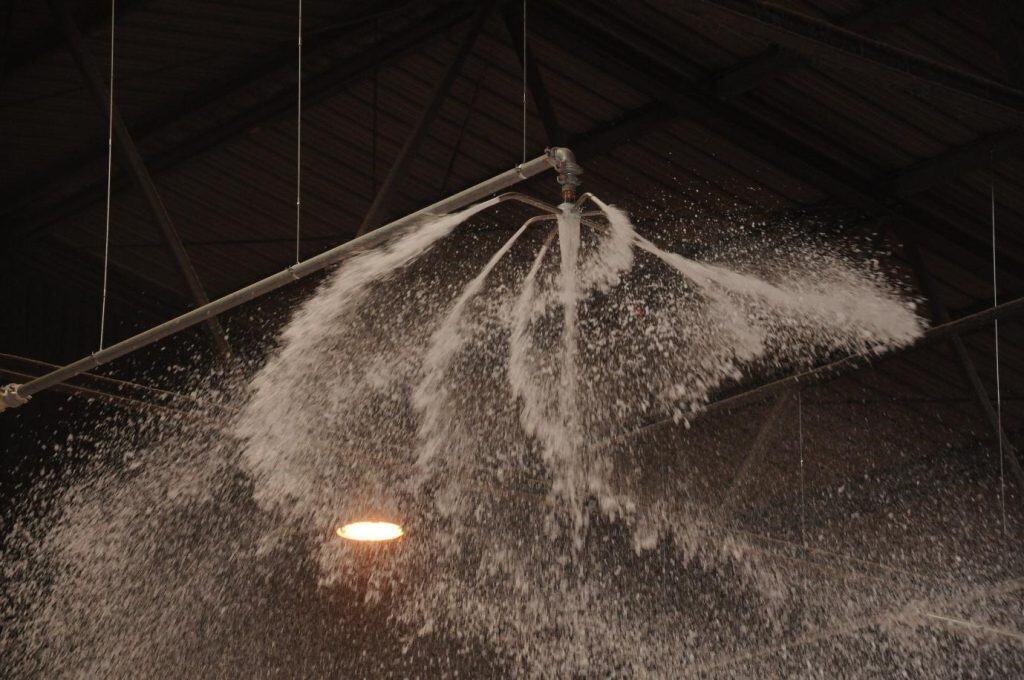
Traditional fire sprinklers are an effective form of fire suppression, but in environments containing sensitive equipment, water-reactive materials or certain cooking-oil hazards, water discharge can introduce additional risks.
Traditional sprinklers commonly discharge between 70 and 100 litres of water per minute. Individual sprinkler heads activate when their heat-sensitive element reaches its rated operating temperature, with 57°C and 68°C being common temperature ratings for standard applications. At the rated temperature, the heat-sensitive element operates, allowing water to discharge from the individual sprinkler head. Only the heads near the fire will activate, which should contain the fire and any water damage to a specific area. However, water will be discharged until either the fire service turns the sprinklers off or the source is depleted.
For certain industrial or commercial facilities, a traditional sprinkler system is cost-effective, compliant and an effective means of fire suppression. However, in food production and laboratory environments, excess water may do as much damage as fire.
Food production
A specific danger of using a traditional sprinkler system in a food production facility is the reaction between water and industrial fat fryers. When combined, larger water droplets sink beneath the surface of the hot oil, vaporising instantly and violently displacing burning oil into the immediate area. This can cause fire to spread, significantly increasing damage and clean-up time.
Laboratories
Water-reactive chemicals are the main reason a traditional sprinkler system might not be suitable for laboratory use. Sodium, potassium, certain hydrides and acid chlorides can react vigorously with water, potentially generating heat, flammable or hazardous gases, or corrosive by-products depending on the substance involved. Heavy water flow can also ruin expensive analytical instruments, like microscopes and computer systems.
What Other Fire Suppression Systems Are There to Choose From?
If traditional water systems are not suitable for certain food production facilities or laboratory environments, then what alternative fire suppression systems are there?
Watermist Systems
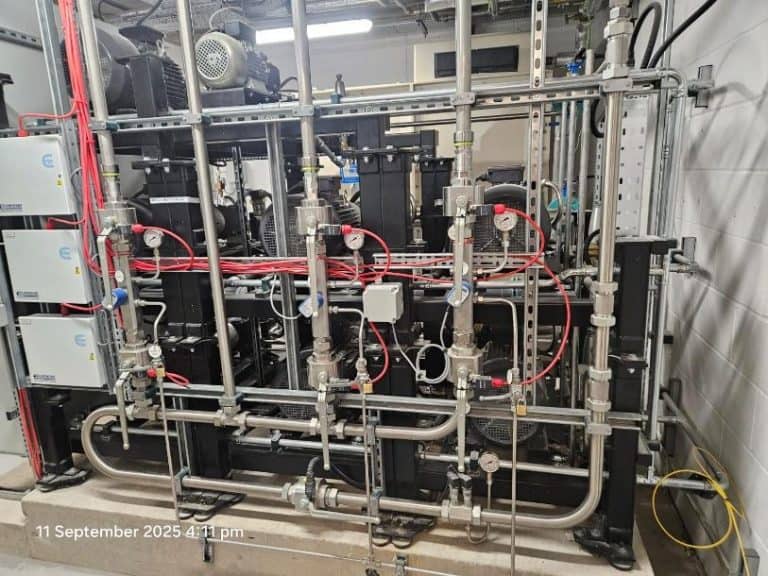
High-pressure watermist systems atomise water into much finer droplets than conventional sprinkler systems. The increased surface area helps the droplets absorb heat rapidly and evaporate, contributing to cooling and local oxygen displacement around the fire.
For suitable cooking-oil applications, correctly designed water mist systems can suppress fire while using substantially less water than conventional sprinklers. The fine droplets absorb heat rapidly and can help minimise the risk of violent oil displacement associated with larger volumes of water. In suitable laboratory applications, watermist can help reduce the potential for water damage to sensitive equipment compared with higher-volume water-based suppression, although it may still be unsuitable where water-reactive chemicals are present.
Gaseous Systems
Gaseous fire suppression systems release inert gas or chemical fire suppression gas, extinguishing fires without water. Depending on the agent used, gaseous systems suppress fire by reducing the oxygen concentration or interrupting the combustion process.
In food production, this means a gaseous system may prevent a fire without effectively cooling the environment. This could lead to hot oil reigniting once the gas disperses. In suitable laboratory applications, gaseous suppression can control fire without introducing water or leaving residue, helping to protect sensitive equipment where water-based suppression may be inappropriate.
Compressed Air Foam Systems
Compressed air foam systems (CAFS) inject air into a foam concentrate solution, creating an aerated foam that can coat fuel surfaces, suppress flames and help absorb heat. They work by cooling, smothering and insulating fires.
In suitable food industry applications, CAFS can create an aerated foam blanket that helps suppress flames, limit oxygen reaching the fuel surface and absorb heat. However, because there is still water in CAFS, it can be unsuitable for laboratory use where there may be reactive chemicals.
Comparison Table
| System | How It Works | Food Production Suitability | Laboratory Suitability |
|---|---|---|---|
| Traditional Sprinklers | Many standard systems discharge 30-60 litres of water per minute; individual heads operate at their rated temperature | May present additional risks around cooking oils, alongside potential water damage to machinery | May damage sensitive equipment and may be unsuitable where water-reactive chemicals are present |
| Watermist | Fine droplets absorb heat and evaporate rapidly, contributing to cooling and local oxygen displacement | Can provide cooling and suppression with reduced water discharge in suitable applications | Can reduce water discharge around sensitive equipment, but may be unsuitable for water-reactive chemicals |
| Gaseous | Inert or chemical gas displaces oxygen or interrupts the combustion reaction | Extinguishes fire but doesn’t cool oil, so reignition is possible | Leaves no water or residue, making it suitable for some sensitive equipment applications |
| CAFS | Foam smothers, cools and insulates | Can suppress and cool suitable cooking-oil and grease fire risks, subject to system design and application | Residual moisture can react with chemicals |
Preventative Measures
Fire suppression forms one part of a wider fire safety strategy. Preventative measures, detection, risk assessment and staff training can all help reduce risk and support an effective response if a fire occurs.
Detection
Combat Fire’s detection and alarm systems use advanced sensors and intelligent control panels for instantaneous hazard identification, with remote monitoring for rapid, automatic response. They can be interfaced with your suppression and evacuation systems for a joined-up approach to safety.
Signage
Combat Fire supplies and installs signage fully compliant with BS 5499, from escape route and exit signs to fire action notices and extinguisher identification.
Warden training
Combat Fire’s fire warden training covers extinguisher operation, alarm response and evacuation protocols, tailored to each client and delivered by accredited instructors, so your team can respond with confidence in an emergency.
Risk assessment
UK fire safety law requires a designated responsible person to carry out, maintain and document a fire risk assessment. Combat Fire’s assessments identify hazards and evaluate the level of risk, giving you expert advice on where extra protection is needed and ensuring your business stays compliant.
The Right System Depends on Individual Factors
When it comes to fire safety, there is no one-size-fits-all solution. CAFS, watermist and gaseous systems all have their own strengths; the right choice comes down to your specific hazards, whether that’s a fat fryer or a bench full of reactive chemicals.
If you’re not sure which combination is right for your facility, Combat Fire can help you assess your risks and find a solution that fits. Contact us today.