
Fast and Reliable Gaseous Fire Suppression Systems From Combat Fire
At Combat Fire, we design, install and maintain gaseous fire suppression systems for commercial and industrial sites across the UK, protecting critical assets and enabling rapid post-discharge recovery, all while maximising fire control.
Our gaseous fire suppression systems use inert gas or chemical clean agents to extinguish fire without water, residue, or damage to sensitive equipment.
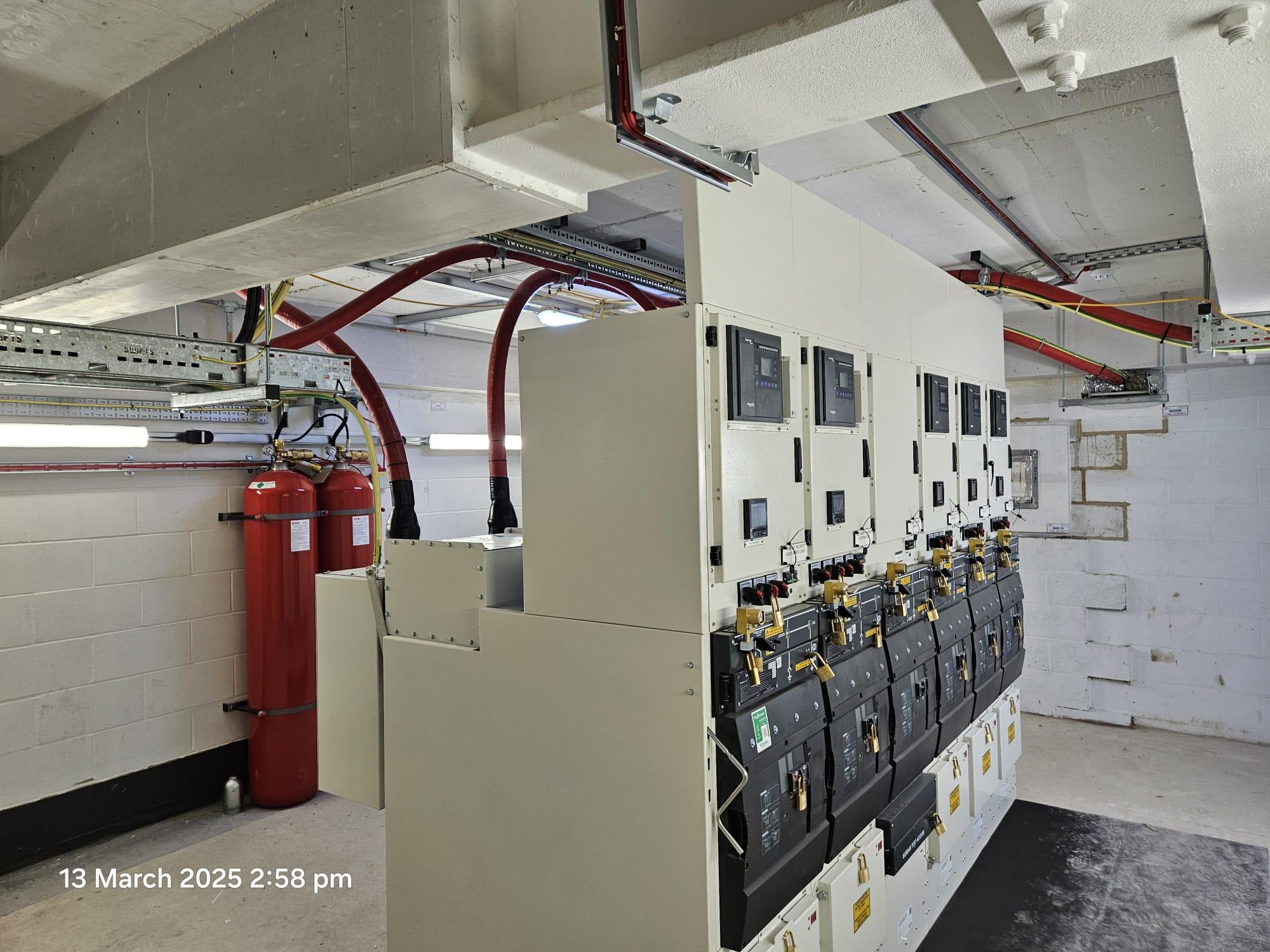
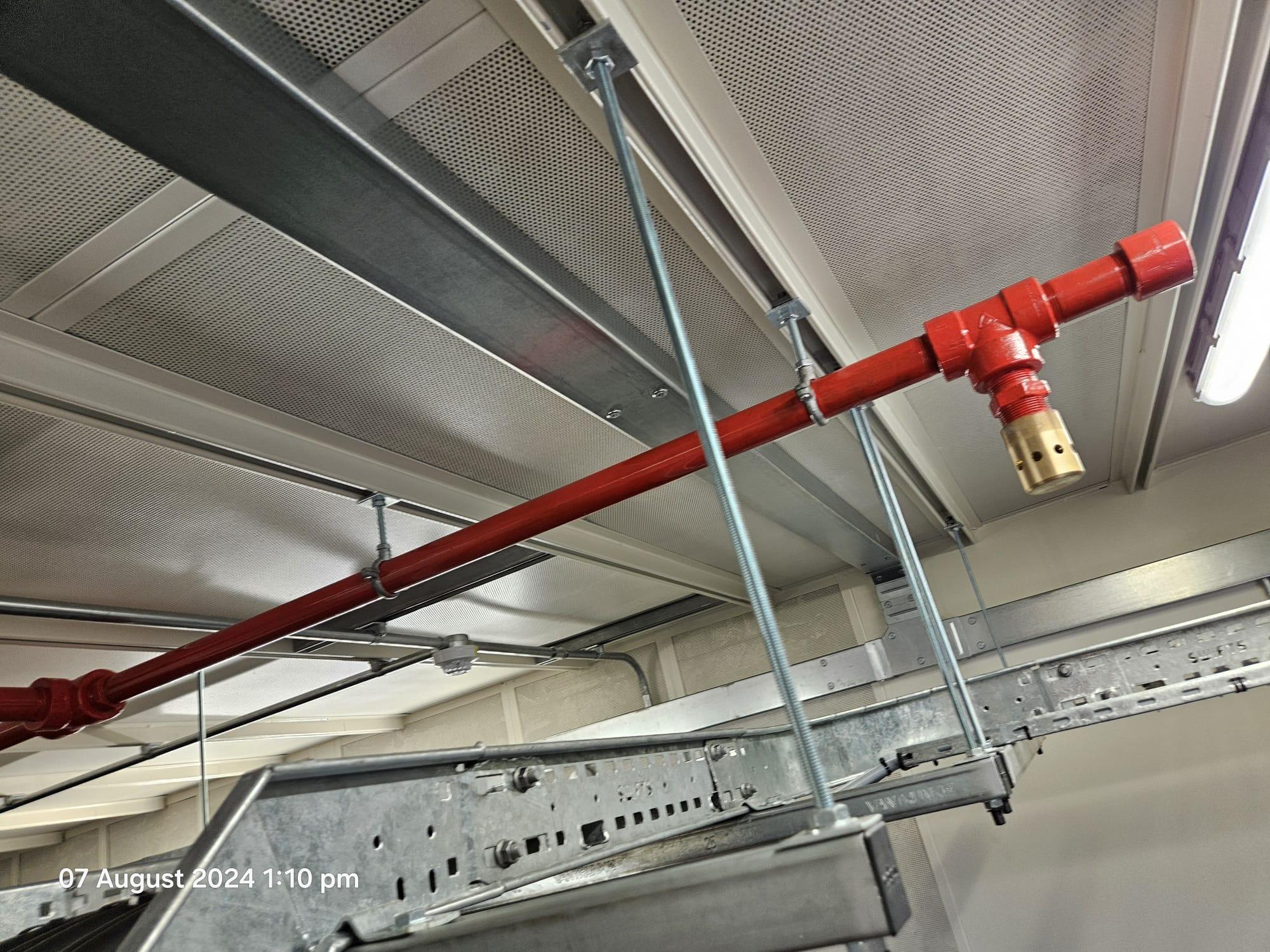
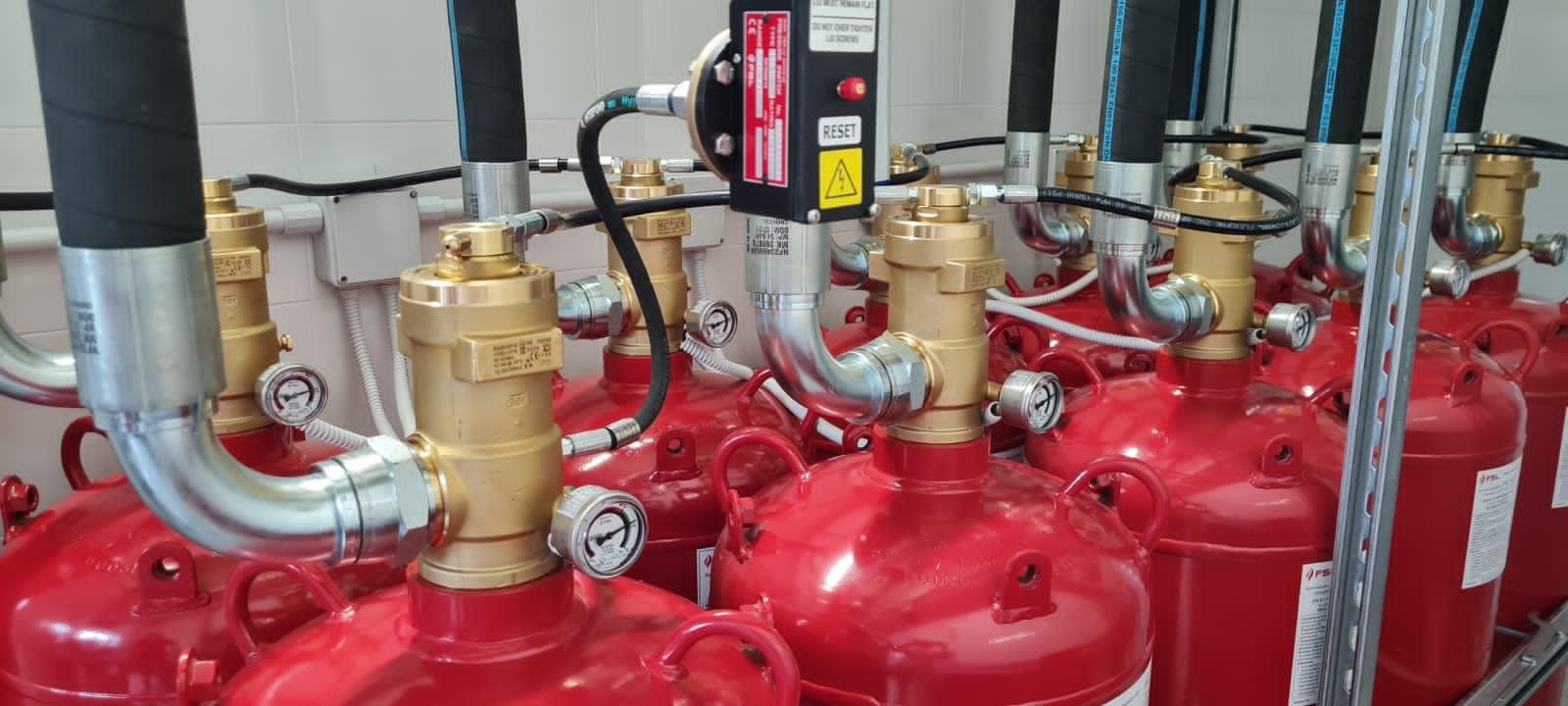
Fast and Reliable Gaseous Fire Suppression Systems From Combat Fire
At Combat Fire, we design, install and maintain gaseous fire suppression systems for commercial and industrial sites across the UK, protecting critical assets and enabling rapid post-discharge recovery, all while maximising fire control.
Our gaseous fire suppression systems use inert gas or chemical clean agents to extinguish fire without water, residue, or damage to sensitive equipment.
How fire suppression gas works
Oxygen displacement: Our inert gas agent, IG-55, reduces the oxygen concentration in the protected space to below the level that fire needs to sustain combustion.
Chemical inhibition: The chemical clean agent FK-5-1-12 interrupts the chemical reaction of combustion at a molecular level, extinguishing fire without significantly reducing oxygen levels.
Total flooding: Both agent types flood the entire enclosed space within the system’s designed discharge time and leave no residue, allowing equipment to resume operation immediately after discharge and cleanup.
Commercial Gaseous Fire Suppression Systems For Every Industry
Every business carries its own fire risk profile; that is why we design gaseous suppression systems around your site’s specific needs.
Whether you need an inert gas fire suppression system for a single switch room or a large-scale chemical agent installation across a multi-site data centre, we scale our designs to match your risk profile.
Why Choose Combat Fire?
When you work with us for gaseous fire suppression systems, you’re guaranteed fully compliant gaseous systems coupled with practical advice from experienced fire safety specialists. We work alongside your business to ensure you get the best solution for your unique needs. We also provide regular servicing and advice to ensure your gaseous fire suppression systems are always up to date with the latest British Standards.
Our Gas Suppression System Types
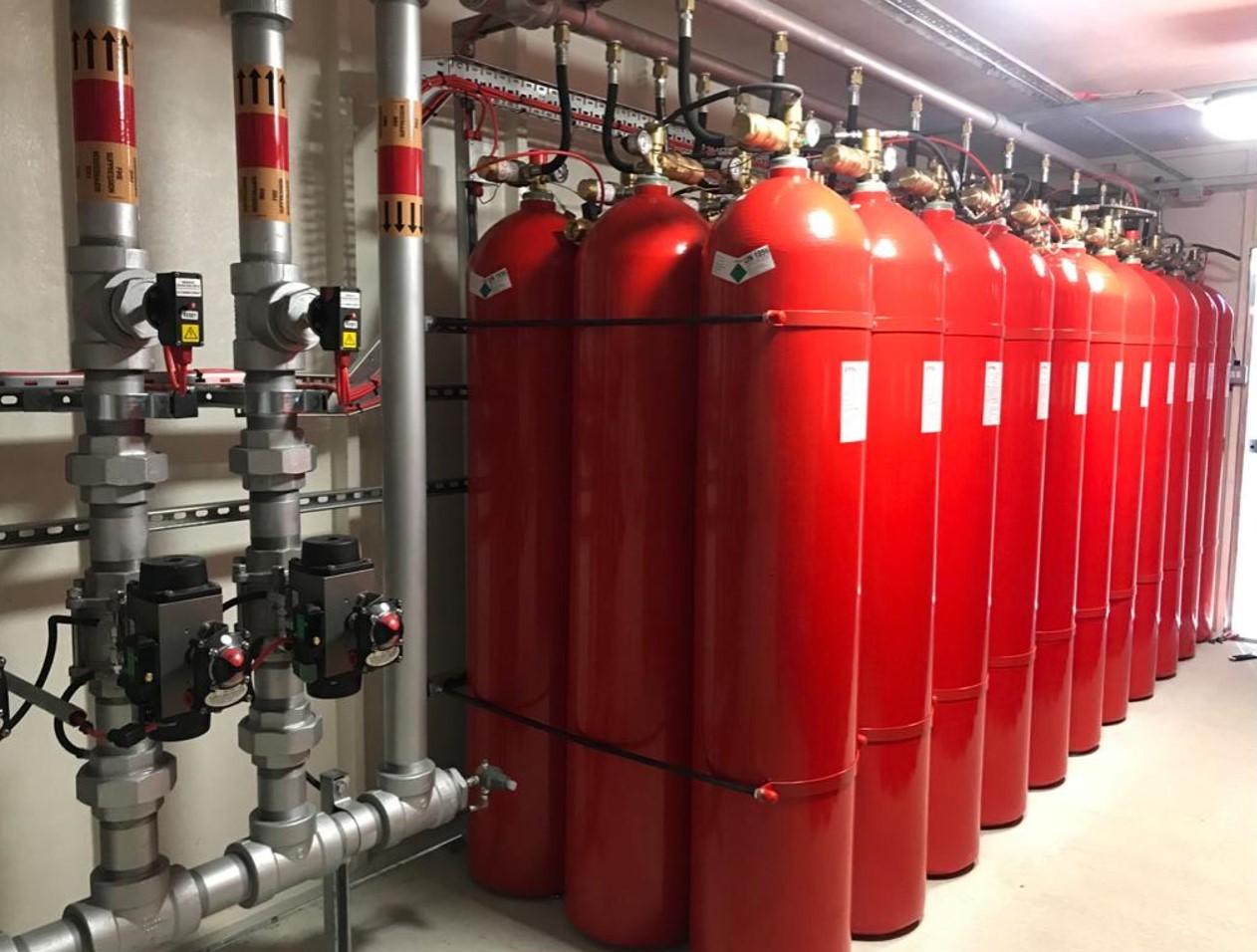
At Combat Fire, we use two main methods for extinguishing fire with our gaseous fire extinguishing systems. These are either clean agents or chemical suppressants. Two of the most common clean agents are IG-55 (which is an inert gas) and FK-5-1-12.
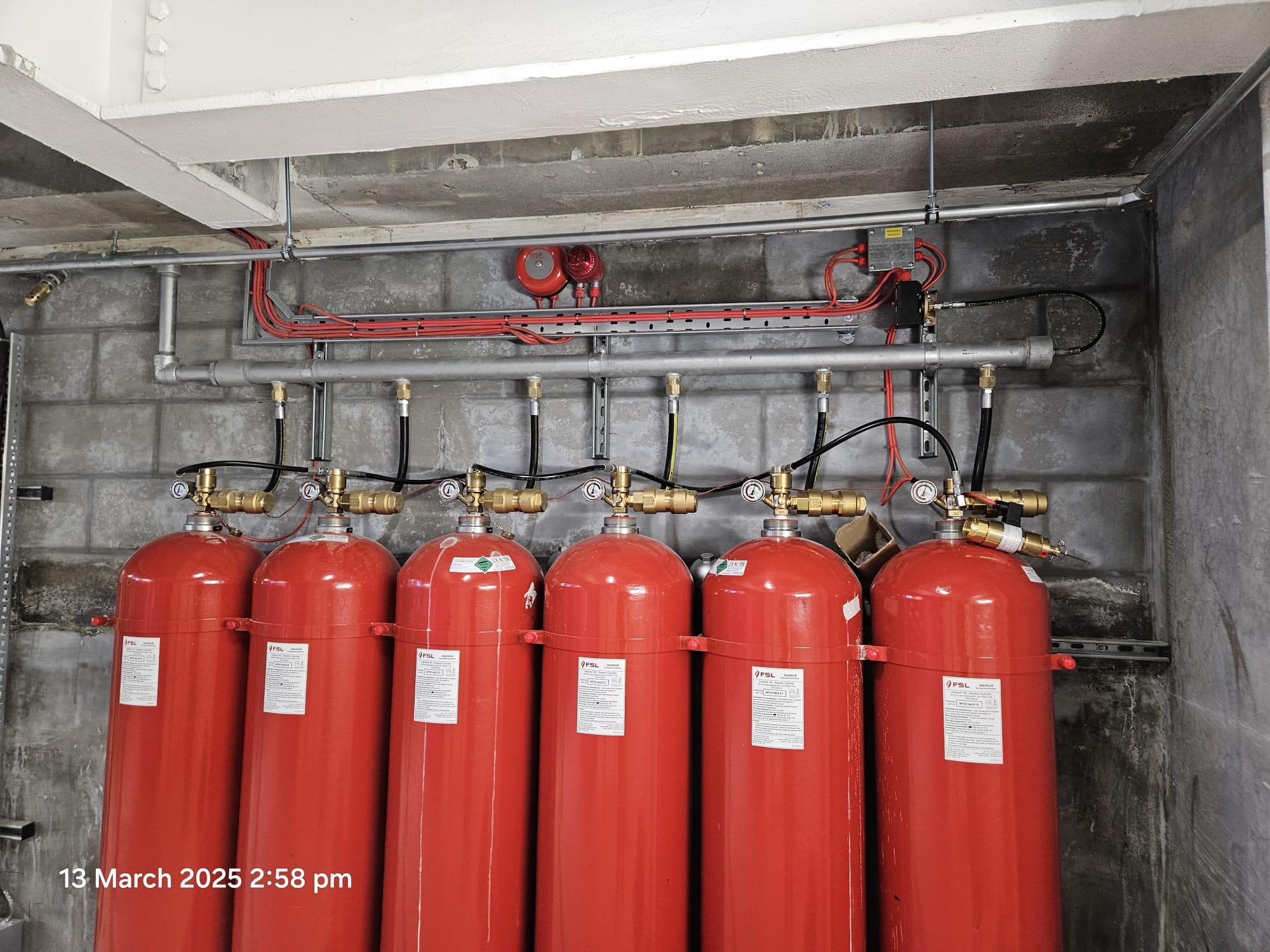
How Much Does a Gaseous Fire Suppression System Cost?
Typically, gaseous fire suppression systems cost more than traditional sprinkler systems. This is due to the price of the extinguishing agent, engineered cylinder storage, and the room integrity testing required to confirm the space will hold a total flood concentration.
For sites housing high-value equipment or data infrastructure, the absence of water damage and near-immediate return to operation after discharge can offset this higher upfront cost.
There are no set prices, and the cost of a gaseous fire suppression system depends on many factors.
Cost factor breakdown
Agent type: Inert gas (IG-55) and chemical clean agent (FK-5-1-12) systems differ in cylinder sizing, storage footprint and agent cost.
Room size and integrity: Larger or less sealed spaces need more agent and, in some cases, additional work to hold the required concentration for the design duration.
Detection and control: Cross-zoned detection, control panels and release interlocks add to system cost beyond the extinguishing agent itself.
Ongoing maintenance: Cylinder recharge, agent testing and servicing contracts affect the total cost of ownership beyond the installation price.
Because every site is different, the most accurate way to understand costs is to book a consultation with Combat Fire so someone on our team can assess your space and risk profile.
Our Reliable Gas Suppression Systems UK-Wide
At Combat Fire, we design, supply, and install state-of-the-art gaseous extinguishing systems that deliver rapid protection for sensitive areas.
Our systems use clean agents which extinguish fire through oxygen reduction or chain reaction inhibition, leaving no residue and avoiding water damage.
Get A Quote
Our Clients
Gaseous Fire Suppression FAQs
How are gaseous systems different from traditional sprinklers?
Gaseous systems extinguish fire using inert gas or chemical clean agents that leave no residue and cause no water damage, whereas sprinklers rely on water. Gas systems suit spaces with sensitive electronic equipment where water contact would cause its own damage.
How much does a gaseous fire suppression system cost?
Cost depends on agent type, room size and integrity, detection and control requirements, and ongoing servicing needs. For an accurate figure, book a free consultation, and we’ll assess your site.
What British standards must gaseous fire suppression systems meet?
Gaseous fire suppression systems in the UK are covered by BS EN 15004, which sets requirements for the design, installation, testing and maintenance of gas extinguishing systems.
What’s the difference between inert and chemical gases?
Inert gas, such as IG-55, extinguishes fire physically — displacing oxygen in the protected space to a level below what combustion needs, without reacting chemically. Chemical agents, such as FK-5-1-12, extinguish fire by interrupting the chemical reaction of combustion itself, typically at a lower design concentration and with a smaller storage footprint than inert gas. Both are non-conductive and residue-free.
How often should a gaseous fire suppression system be serviced?
Gaseous systems should be serviced and inspected regularly by a qualified contractor, including periodic room integrity testing, to remain compliant and effective. Frequency depends on the system manufacturer’s requirements and your site’s risk category.