
Protect Your Business & Your People With Combat Fire
Proper fire risk assessments are essential for understanding where your site needs additional protection and for keeping your business and your team safe. Fire risk assessments identify hazards, evaluate existing controls and provide recommendations to meet fire safety requirements.
At Combat Fire, we offer fire risk assessments and practical recommendations aligned with current fire safety requirements.

What Are Fire Risk Assessments?
Fire risk assessments identify fire hazards, evaluate them, and record a plan to reduce the risks of those hazards to an acceptable level.
A fire risk assessment is more than just a piece of paperwork. The Regulatory Reform (Fire Safety) Order 2005 requires almost every non-domestic premises in the UK to have one as a basis for their fire safety strategy.
How does it work?
Fire risk assessments follow 5 steps, as set out in UK fire safety guidance.
- Identify fire hazards: We inspect the premises to identify potential sources of ignition.
- Identify people at risk: We assess who could be affected by a fire, including staff, contractors, visitors, and anyone on-site outside normal hours.
- Evaluate, remove or reduce the risk: We assess whether your existing precautions are sufficient. If they’re not, we identify what’s needed to reduce risk to an acceptable level.
- Record, plan, train: We produce a written record aligned with PAS 79-1:2020, along with an emergency plan and any training requirements we’ve identified.
- Review: Finally, we recommend a review interval based on your site’s actual risk profile.
A Commercial Fire Risk Assessment For Every Industry
Every business carries its own fire risk profile; that’s why we design our commercial fire risk assessments around your site’s specific needs. Although the 5 steps of a fire assessment may be the same for most non-domestic premises, at Combat Fire, we approach each step differently, depending on the industry. So whether you need a fire risk assessment for a single building or an entire industrial site, we scale our assessments to match your risk profile. |
Why Choose Our Fire Risk Assessment Services?
As a BAFE-certified provider, we work with your business and get to know your industry to ensure you receive a site-specific fire risk assessment aligned with the relevant legal requirements.
How Much Do Fire Risk Assessment Services Cost?
There are no set prices, and the cost of a fire risk assessment depends on many factors.
Cost factor breakdown
- Portfolio scope: Multi-building sites require individual inspections for every building.
- Size and layout: Larger or more complex premises take longer to inspect and assess, which increases time on site.
- Occupancy and use: Higher-risk premises, such as those with complex industrial processes, require more detailed evaluation.
Comprehensive Fire Risk Assessments
Fire safety law in England and Wales requires a designated responsible person to carry out, maintain and fully document fire risk assessments.
At Combat Fire, our professional fire risk assessments work to identify hazards and assess the level of risk. Following this, we are able to provide expert advice to improve overall safety and ensure compliance.
Get A Quote
From Assessment to Suppression
At Combat Fire, we don’t just identify what your site needs to manage the risk of fire; we deliver it. Where an assessment points to the need for fire suppression, our team is able to design, install and maintain the right system for your specific site. With Combat Fire, you can manage assessment, installation, suppression, and maintenance through one contractor.
Our fire suppression systems
- Watermist: High-pressure, water-efficient systems delivering rapid cooling and oxygen displacement with minimal water damage. Watermist is suited to machinery spaces, generator rooms and industrial process areas.
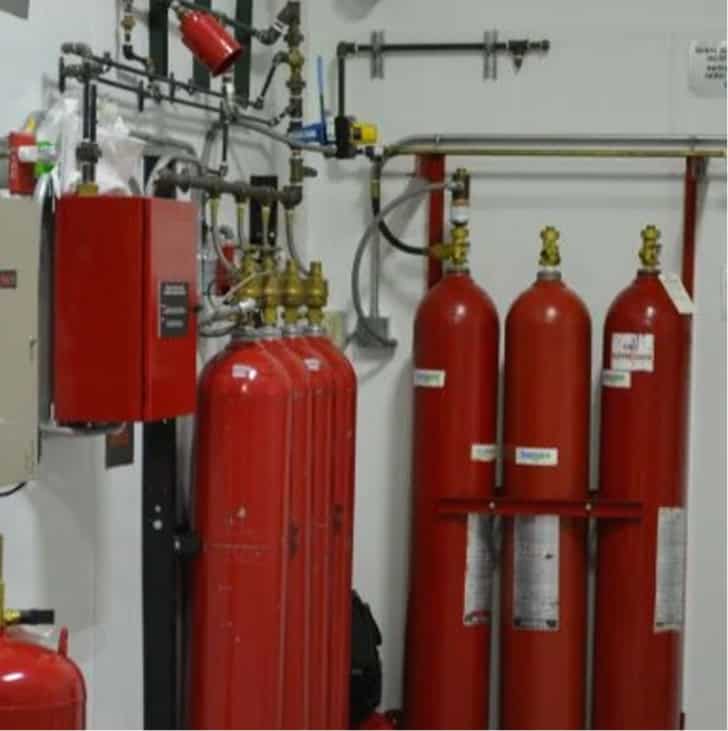
- Gaseous suppression: Inert gas or chemical clean agents that extinguish fire without residue or damage to electronics. Gaseous systems are often used in data centres, switchrooms and laboratory facilities.
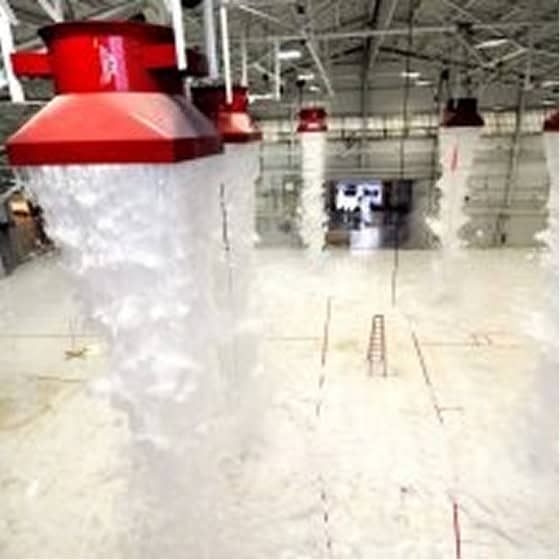
- Compressed air foam: An aerated foam blanket that cools, smothers and insulates fires. CAFS are often used in high-hazard facilities.
Our Clients
Fire Risk Assessment FAQs
Is a fire risk assessment a legal requirement?
Yes. Under the Regulatory Reform (Fire Safety) Order 2005, the responsible person for almost every non-domestic premises in England and Wales must carry out a sufficient fire risk assessment and record it in writing.
How often should a fire risk assessment be reviewed?
Legally, there is no set interval; an annual review is a widely adopted baseline. However, certain events should trigger an earlier reassessment, regardless of when the last review took place. These events are building alterations, a change of use or occupancy, new processes or materials on-site, a fire incident or near-miss, or extended vacancy and significant staff changes.
What does a fire risk assessment cover?
A fire risk assessment covers hazard identification, an evaluation of the risk to people in and around the premises, and a documented action plan outlining the necessary precautions.
Who is responsible for arranging a fire risk assessment?
The ‘responsible person’ is the term used within the FSO; this is usually the building owner or the facilities manager.
What happens if my fire risk assessment identifies issues?
Hazards are identified and recorded in an action plan. The responsible person is required to act on this within a reasonable timeframe to reduce the risk of fire to an acceptable level.