
Specialist maintenance and servicing are what keep fire suppression systems compliant and effective. If your facility is equipped with a compressed air foam system (CAFS) or if you are considering investing in one, then it is important that you understand the inspection, testing and maintenance requirements that apply to the system, including those set out in the relevant parts of BS EN 13565.
What is a CAFS Fire Fighting System?
CAFS protect commercial and industrial facilities from fire while minimising water consumption and water damage. CAFS works by injecting compressed air into a foam solution, creating an aerated foam that can coat fuel surfaces, suppress flames and help absorb heat. Because CAFS can achieve effective coverage using less water than conventional water-based suppression, it can help reduce the potential for water damage in suitable applications.
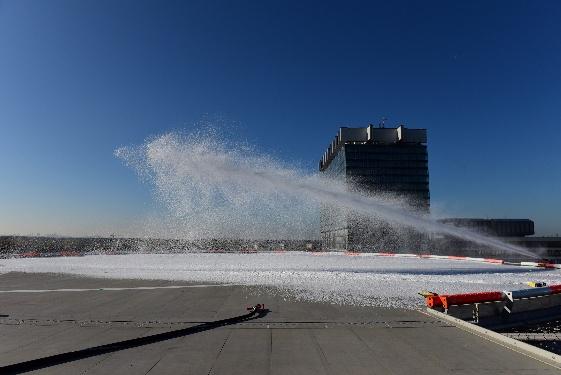
Fire Suppression Maintenance
What are the regulatory requirements of maintaining a compressed air foam system? Maintenance frequency depends on the system design, application, manufacturer requirements and relevant standards. CAFS installations should follow a planned inspection and servicing schedule appropriate to the individual system and the risks it protects.
What happens in a maintenance visit?
Each visit covers a full inspection, testing of all safety-critical components, cleaning, adjustment, and professional certification, plus a detailed service report for your records.
What standards must compressed air foam systems be maintained to?
BS EN 13565-1 and BS EN 13565-2 are European Standards that cover fixed foam firefighting systems. BS EN 13565-1 specifies requirements and test methods for components, while BS EN 13565-2 covers system design, construction and maintenance. The specific components covered are:
- Proportioners: blend foam concentrate with water at the correct ratio before it reaches the discharge point.
- Sprayers: distribute the finished foam solution over the protected area or hazard surface.
- Semi-subsurface hose units: deliver foam beneath the surface of a flammable liquid, allowing it to rise and blanket the fuel from below.
- Branch pipes: direct and control the flow of foam solution to specific discharge points within the system.
- Low/medium expansion foam generators: produce foam with a lower air-to-solution ratio, suited to direct application on liquid fuel fires.
- High expansion foam generators: produce large volumes of lightweight foam capable of flooding enclosed spaces and displacing heat and smoke.
- Foam chambers: fixed discharge outlets, typically mounted on storage tanks, that apply foam directly onto the surface of stored liquids.
- Tanks: store the foam concentrate ready for use, maintaining it at the correct volume and condition.
- Pressure vessels: hold foam concentrate or premix solution under pressure, ready for rapid discharge into the system when activated.
The Complexities of Compressed Air Foam Fire Suppression Systems
Is there a limit to how long foam concentrate remains effective? And what potential CAFS issues can regular specialist servicing identify and address?
Three elements, one integrated system
CAFS brings together three key elements: water, foam concentrate and compressed air, which all need to work in precise harmony. The compressed-air supply needs to meet the system manufacturer’s requirements, while the foam concentrate must be stored and monitored correctly, and the proportioning equipment regularly checked. More working parts can mean a higher risk of system failure.
Maintaining the right proportions
The water-to-foam concentrate ratio determines the effectiveness of this system, and over time, proportioning and mixing components can require adjustment or recalibration to maintain the correct foam concentration. Regular servicing can identify issues with proportioning and mixing components before they affect system performance.
Foam concentrate lifespan
Foam concentrate doesn’t last indefinitely; things like extreme temperatures can degrade it. Some foam is also mildly corrosive, and residue left sitting in pipework can cause damage. Foam concentrate levels and condition should be checked as part of any scheduled maintenance visit, alongside routine flushing and inspection of pipework.
Combat Fire Provides Specialist Servicing For Compressed Air Foam Systems
Combat Fire offers comprehensive scheduled maintenance and servicing for all major fire protection systems to ensure your premises remain fully compliant, protected, and operational. We always work to the recommendations from the service and maintenance section of the relevant British Standards using BAFE-approved engineers.
For CAFS, this means maintenance of foam concentrate supply, mixing apparatus, discharge pipework, and controls. We also carry out operational tests, fluid level checks, and system integrity inspections to maximise fire suppression efficiency and rapid activation capability. All of our servicing is performed by accredited engineers, with digital service records, 24/7 support, and compliance assurance for insurance and regulatory audits.
Minimal disruption
We carefully schedule maintenance to minimise disruption. Most services can be performed in a matter of hours, depending on the number of systems and their size and complexity. With Combat Fire, specialist servicing can keep your fire suppression systems compliant and effective, while minimising disruption to your daily operations.
What if there’s a fault?
Our engineers report findings immediately and provide advice for remedial action. Minor repairs or replacements can often be carried out during the same visit, and we can quickly schedule larger maintenance jobs. We also offer 24/7 support for urgent repairs or compliance issues, so you can rely on us whenever you need assistance.
Compliance documentation
We provide full service records, compliance certification, and clear guidance for insurance and regulatory audits every time.
Every CAFS installation is different, and the right maintenance schedule depends on your system’s size, complexity, and how it’s applied across your site. Our BAFE-approved engineers can assess your current setup and put together a servicing plan that keeps your system operational and audit-ready.
Get in touch with Combat Fire today to book a consultation.