
Fire alarm regulations for commercial buildings in the UK all begin with a single piece of legislation: the Regulatory Reform (Fire Safety) Order 2005 (FSO). This places legal duty on the ‘responsible person’, usually a business owner or facilities manager, to carry out a fire risk assessment and provide appropriate means of detection and warning.
The FSO establishes who is responsible for ensuring compliance. It also outlines the consequences of non-compliance: enforcement notices, fines, and in serious cases, prosecution. But it doesn’t tell the owner or facilities managers how to keep their site compliant. For that, you need BS 5839-1.
Fire Alarm Regulations For Commercial Buildings in the UK
BS 5839-1 is the British Standard code of practice for the design, installation, and maintenance of fire detection and alarm systems in non-domestic premises. It’s a practical mechanism that most commercial and industrial sites use to meet their FSO obligations.
The current version is BS 5839-1:2025, which replaced BS 5839-1:2017. This update reflects advances in detection technology and guidance from real incident data. If your site was designed to the 2017 version, it’s worth booking a fire risk assessment to check for any required updates.
What Are These Regulations Designed to Protect?
BS 5839-1 systems are designed to protect life and property. Life protection is about early warning and safe evacuation for people and staff. Property protection is about limiting damage to buildings and equipment, and by extension, business continuity.
How Do You Pick a System That Ensures Fire Safety Compliance?
A fire risk assessment is what determines the system your facility requires, and how that system can be designed and installed. All facilities are different; your alarm system needs to be adaptable to specific building layouts, escape routes, occupancy, and business continuity needs. Even if two facilities are classed as commercial, their alarm systems will have different needs.
Grade A systems
Grade A systems are commonly specified for many commercial and industrial premises where a comprehensive automatic detection and alarm system is required. The appropriate category depends on the fire risk assessment and system objectives.
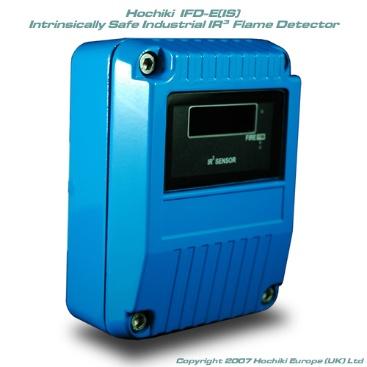
Grade A systems include: automatic detectors, manual call points, sounders, a central control and indicating panel, dedicated fire-resistant cabling, and battery back-up power. Overall grade A systems must comply with BS 5839-1, while their individual components, such as detectors, panels and sounders, must conform to BS EN 54. This is the standard to look for when verifying an installed system or checking a contractor’s specifications.
Insurance and system selection
Beyond compliance, sites with specific process risk may require additional fire alarm systems. For some insurers, specific detection systems are a condition of cover.
Commercial Fire Alarm Maintenance: What Evidencing Compliance Looks Like
A system is only compliant if it’s properly maintained and supported by documentation. Commercial fire alarm maintenance under BS 5839-1 follows a defined regime:
- Weekly testing: a different manual call point is tested each week, confirming the system operates and is audible throughout the building.
- Periodic servicing: typically six-monthly, carried out by a competent engineer, covering detectors, control equipment, batteries, and sounders.
- A log book: recording every test, service visit, fault, and false alarm. This is an important piece of evidence.
For more information on fire system servicing and maintenance schedules, see Combat Fire’s servicing and maintenance page.
Fire Safety Compliance with Combat Fire
Under BS 5839-1, fire alarm design, installation and maintenance should always be carried out by a competent supplier. Combat Fire is a BAFE-certified fire safety provider specialising in compliant detection, suppression and maintenance systems. We offer end-to-end single-source provision alongside specialist technical expertise.
Our fire detection and alarm systems use advanced sensors, intelligent control panels, and remote monitoring for rapid, automatic hazard detection. On sites where detection needs to trigger more than an alarm, our systems interface directly with automatic suppression systems, too.
We design our systems around the specific risk profile of your site. That bespoke engineering supports fire safety compliance from initial risk assessment through to ongoing servicing, all under one team. We work across data centres, food and beverage production plants, and industrial and manufacturing sites, in any environment where detection has to support business continuity as much as life safety.
For a system review or technical assessment, contact Combat Fire.
FAQs
Do all commercial buildings need a fire alarm system?
Not explicitly. The FSO requires every non-domestic premises to have “appropriate means of detection and warning,” determined by the site’s fire risk assessment. What counts as appropriate depends on the building, but it is often a fire alarm system.
Who is legally responsible for fire alarm compliance in a commercial building?
The “Responsible Person,” usually the facilities manager or owner, is accountable for maintaining compliant fire detection systems.
How often does a commercial fire alarm need to be tested?
A different manual call point should be tested weekly, alongside a six-monthly professional servicing by a competent engineer. Both need to be logged to confirm and record compliance.