
Even something as everyday as a fire exit sign sits under multiple layers of fire safety signage regulations. BS EN ISO 7010 is the international standard behind the pictograms, such as the running figure and the extinguisher symbol. BS 5499-10 and BS 5499-4 are the British Standards that provide guidance on how those symbols are applied on UK sites, covering strategic positioning and visibility.
These standards address the duty set out in both the Health and Safety (Safety Signs and Signals) Regulations 1996 and the Regulatory Reform (Fire Safety) Order 2005. In short, the legal mandate is that the 2005 Order creates the duty to assess and mark a site, and the 1996 Regulations create the specific duty to sign it. BS EN ISO 7010 and BS 5499 aren’t legal mandates; however, they do set out how a legally compliant sign is manufactured and installed.
Comparing Standards: BS EN ISO 7010 and BS 5499
These are not competing standards. While certain parts of BS 5499 have been withdrawn, such as BS 5499-1, which previously set out the shapes, colours and layouts of fire safety signage, other parts of the standard remain. BS 5499-10 and BS 5499-4 are built to reference BS EN ISO 7010 directly. Put simply, ISO 7010 shows us what a symbol looks like, while BS 5499 shows us where to use it.
Common Compliance Pitfalls
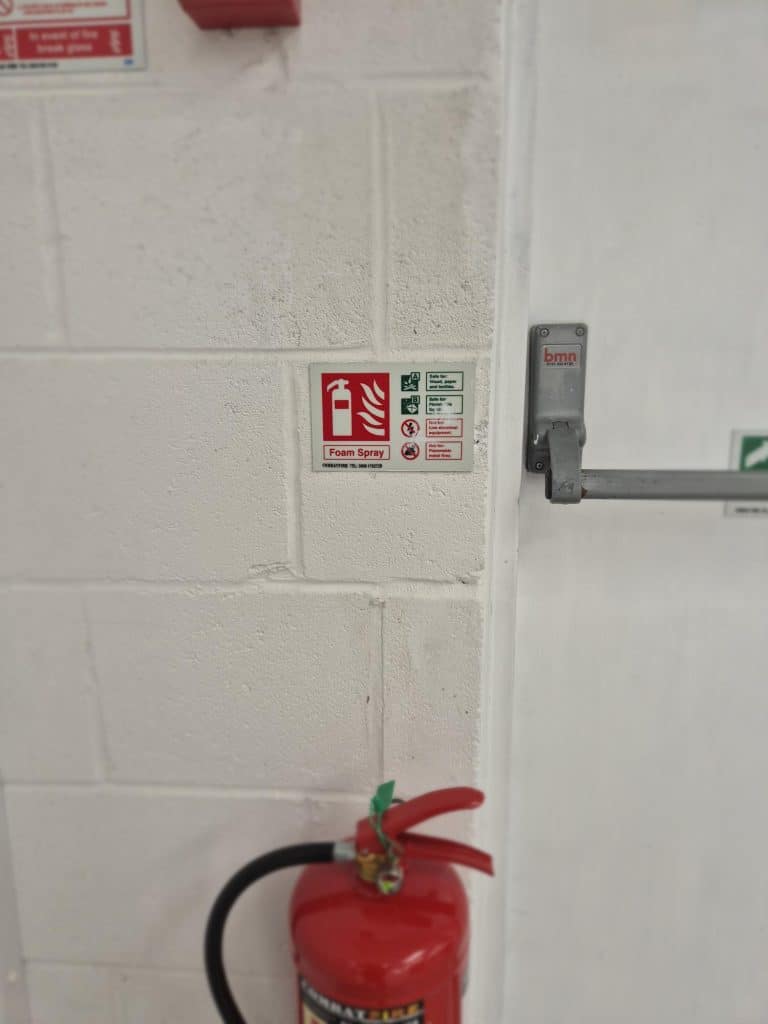
Mixing different generations of signage is one of the more common compliance issues facilities make, often after something like a partial refurbishment. Best practice is not to mix the two systems’ sign designs within a building. Facilities managers should also be careful of non-registered symbols that look legitimate, but aren’t manufactured to BS EN ISO 7010 standards.
Fire Safety Signs: Colour Coding, Shapes and Symbols
Compliant fire safety signage must follow the visual guidelines shown in BS EN ISO 7010. This standard contains the specific catalogue of registered pictograms designed according to the principles set out in BS ISO 3864.
Shapes
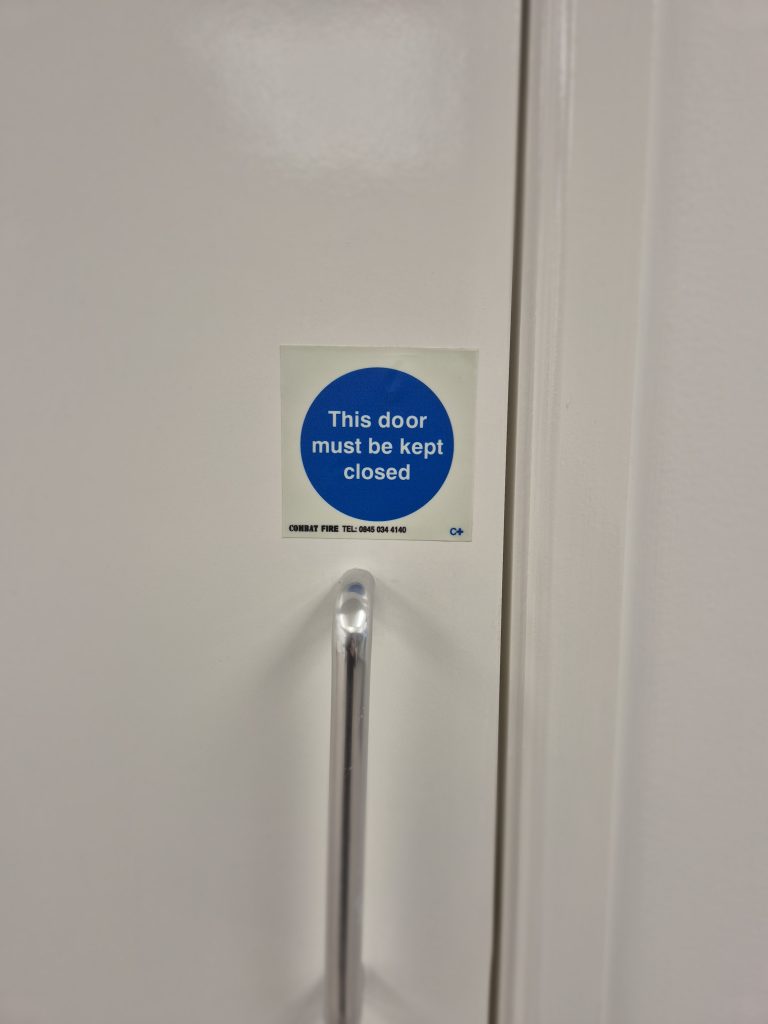
Shape is read before colour or symbol. A circle carries a mandatory instruction or a prohibition. A triangle carries a warning. A square or rectangle carries safe-condition or fire-fighting equipment information.
Colours
Red marks fire-fighting equipment and its location. Green marks emergency escape routes and exits. Blue marks a mandatory action. Yellow marks a warning. These colour assignments are defined within the standardised sign system and remain consistent across registered signs.
Symbols
The pictograms themselves come from the ISO 7010 register rather than being designed per site. That’s what makes a sign readable to someone who’s never set foot in the building before.
The benefits of homogenised designs
A registered symbol set means that an engineer on a routine visit and a contractor on-site for the first time can both read the signage. For countries that have adopted ISO standards, it also means that someone who can’t speak the local language will know how to escape a facility in the event of a fire. A universal set of signs improves consistency and recognition across different environments.
Fire Safety Signage and Text
Despite the benefits of universal signage, sign comprehension is not always perfect. This is why UK escape route signs combine the registered symbol with supplementary text, such as “Fire Exit” or “Fire Escape”, and a directional arrow.
A further standard, BS ISO 9186-1:2014 (now under review), tests comprehension. It sets out how a symbol is judged and matched to its intended meaning, and then scores it before it’s approved for use. Using symbols, text and arrows together can move signage comprehension closer to full comprehension.
Do Fire Safety Signage Requirements Vary Per Building?
The regulations set the framework for proper fire signage. However, the specific signs your building needs will be determined during a fire risk assessment. A warehouse with a basic sprinkler system and a data centre with 24-hour staff and a gaseous suppression system are both subject to the same overarching legislation and standards.
Building types matter, too. Somewhere like an underground server room, where smoke can obscure high-mounted signs, BS ISO 16069:2017 covers low-level, photoluminescent wayfinding systems that remain visible at floor height.
How Combat Fire Can Help
Combat Fire installs fire safety signage alongside fire detection systems and fire suppression systems. With us, signage reflects your site’s actual risk profile, rather than a generic template.
However, signage is not a one-off install. Standards change, and signage needs to be kept up to date to ensure site compliance. Signage review sits within Combat Fire’s wider servicing and maintenance work.
To see what signage your building needs, begin with a free site survey before committing to a full service. Also, if you have any questions about current international and British standards, please contact us.